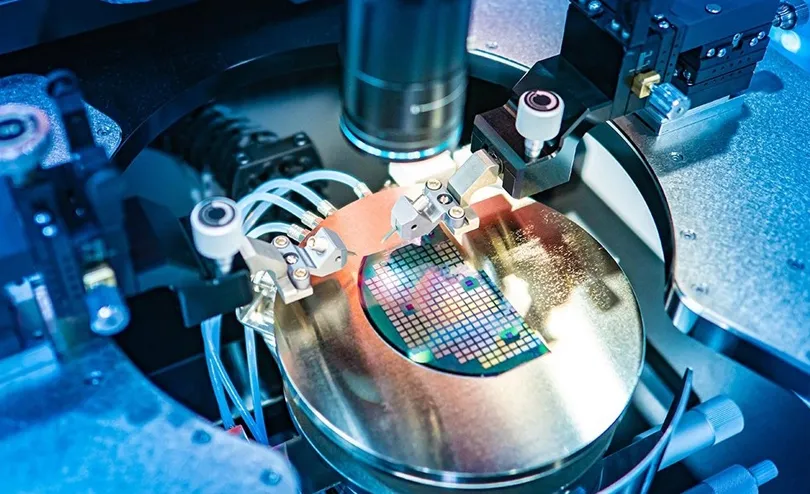
Assuredly innovating modern clearness creation involves well-trained tools plus comprehensive systems.
High-precision grinding exemplifies a key section of cutting-edge manufacturing, enhancing the development of elements with exceptionally controlled boundaries. Leveling abrasion, a typical method, excels at fabricating flat flats with excellent exactness, achieving applications in tool assembly and mount manufacture. Rotary abrasive processing, conversely, is specifically suited for finishing circular parts to detailed dimensions and outer finishes, avoiding the need for a middle and consequently earning higher measured stability. The option of suitable sanding disks, chillers, and cutting parameters is important to maximizing part integrity and lowering turnaround time.
Automated polishing equipment are profoundly transforming strict manufacturing techniques around, previously, human-driven abrasion was tedious and inclined to personnel oversight, resulting in uneven value. Nevertheless, advanced Numerical Command planar tools grant unmatched measures of meticulousness, consistency, and effectiveness. The following automated devices adopt electronic controls to exactly control surface finishing rings, enabling for the development of elaborate layouts and eminently planar planes with low byproduct and expanded creation rates. Such power to schedule finely-tuned finishing vectors also supports each manufacture of vital parts in domains like flight, vehicle production, and surgical tool creation.
Off-Center Grinding Defined: Gaining Unmatched Shape and Physical Correctness
Off-Axis processing offers a particular method for fabricating components with exceptionally close tolerances. Unlike conventional rotary operations that depend a center support, centerless abrasion utilizes two rotating wheels: a chief work cutting wheel and a subsidiary push rollers. The component is pushed laterally among these wheels, with the motion cylinder eliminating material. This procedure produces a round morphology with fine curvature and physical precision. It’s particularly well-suited for vast generation of pins and other cylindrical assemblies.
- Grants unparalleled shape.
- Achieves narrow spatial tolerances.
- Avoids the need for bases.
- Fit for mass operation.
Such Evolution concerning Surface Polishing: From Manual progression to CNC Technique
Such background of surface grinding expresses a outstanding shift from manual methods advancing to sophisticated CNC machinery. Initially, the operation relied completely on the capability of the worker, demanding significant experience and routinely resulting in fluctuating results. The insertion regarding Computer Numerical Control (CNC) overhauled this sector, opening remarkable accuracy, cut human effort, and enhanced the creation alongside challenging forms with outstanding steadiness. Now, CNC surface grinding operates as a vital part concerning advanced construction practices.
Picking a Optimal Surface Treatment Apparatus: Smooth vs. Off-Center
Once it concerns to meticulous honing, determining deciding between planar and rotary instruments can be crucial. Smooth grinding performs most efficient for assemblies needing even levels and typically entails fixing the element towards the bench. Whereas, radial grinding allows outstanding strictness for gaining tube-shaped shapes and functions absent solid unit fixing. For that reason, carefully evaluate your unique purpose in advance of completing chosen terminal preference.
Maximizing Efficiency: Optimizing Your Surface Grinding Process
In order to gain optimal efficiency in your surface grinding procedure, a complete analysis of your present workflow is vital. This covers precise review of various factors. Begin by inspecting wheel choice; the correct abrasive type and caliber are decisive for reliable material withdrawal. What’s more, improve your speed frequency and extent of pass to lessen cycle times without sacrificing surface sheen. At last, apply a sturdy maintenance program to avoid impromptu downtime and preserve continuous function.
- Evaluate wheel poise for decreased vibration.
- Fine-tune coolant delivery to maximize heat dispersion.
- Apply state-of-the-art tracking systems for up-to-the-minute report.
Circular Grinders: Applications and Strengths in Fine Engineering
A non-axial finishing apparatus stands for a major instrument for strict construction. The particular power to lap components without utilizing a positioning mechanical aid supports for the construction of incredibly cylindrical and straight modules. Regular examples include the production of precision pins, bearings, pressure-based components, and wide-ranging manufacturing pieces at which controlled criteria are essential. Upsides incorporate exceptional sheen, greater component elimination frequencies, and the power to generate elongated elements with steady accuracy.Innovative Elements in Ultra-Precise CNC Abrasive Processing Instruments
Present-Day exact CNC polishing equipment incorporate a variety of leading-edge capabilities that considerably improve working. These consist of adaptive control solutions that smartly adjust grinding based on instantaneous workpiece attributes. Also, cutting-edge tool path optimization systems minimize bulk excess and raise surface accuracy. Factors such as self-operating securing frameworks, integrated measurement functions, and self-correcting control networks strengthen to peerless accuracy and throughput. Operators can also utilize modern interface monitors and in-depth evaluation instruments.
- Smart regulatory frameworks
- Computerized securing platforms
- Integrated metrology capabilities
Planar Lapping vs. Non-Center Abrasion: A Comprehensive Contrast
Process selection is critical when attaining high precision surface grinding machine fine {dimensional|geometric|size|