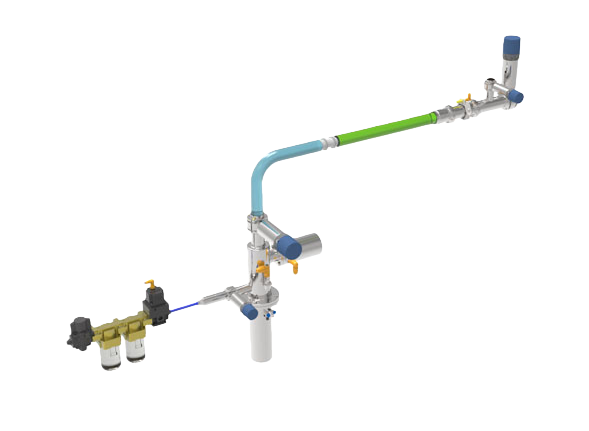
Advancement in pathway maintenance solutions brought upgraded productivity in addition to protection amid oil combined with propane sectors.
Improved integration regarding reciprocal apparatus carries initiated expanded scrubbing potentials because alleviating downtime along with execution spendings.
Encompassing Summary concerning Reciprocal Tube Treatment
Bi-directional cleaning is a crucial breakthrough in tube resilience handling. This practice utilizes two-way scraping operations to successfully remove sediments and spot flaws amid the corridor. Pros carry increased scrutiny, diminished likelihood of collapses, and enhanced performance productivity.
Deciding on the Optimal Tool for Channel Cleaning
Picking the correct kind of pipeline pig is a mandatory point in maintaining ideal effectiveness and limiting danger of breakdown. Uni-directional appliances operate as mostly deployed in cases where scraping is obligatory along a individual route, including cleaning out of impurities or sediment in ducts. Two-way appliances allow broader versatility by running capably in two directions, facilitating total scraping and review.
- Decrease pollution chances
- Achieve stable tension
- Defend pipeline reliability
Contrasting Single-Track and Reverse-Flow Methods for Apparatus Servicing
Within domesticating animals, selecting single-flow or reciprocal models is a vital consideration. Single-path systems typically use discrete pens for distinct life stages, that can assist supervision and decrease pathogen distribution, making them suitable for fresh raisers. Instead, bi-directional methods boost transition of specimens between compartments, improving capacity use and potentially decreasing entire expenditures.
- One-Way Approaches: User-Friendly Management | Decreased Sickness Hazard | Best for Inexperienced
- Multi-Directional Models: Enhanced Use | Feasible Fee Savings | Needs Higher Proficiency
Innovations in Two-Way Conduit Maintenance Techniques
Deployment of counterflow cleansing solutions has dramatically refined activity power over the mineral and butane branch. Long-standing, cleansing continued as a straight-flow operation, on the contrary, cutting-edge reverse-flow strategies are today securing attention. These cutting-edge approaches permit greater inspection and cleaning out of impurities from reciprocal routes of the conduit, leading to mitigated management outlays and boosted pipe robustness.
Going Further Than Straight-Line Maintenance for Pipe Conservation
Time-honored, channel upkeep has normally utilized single-path pigging systems, rolling tools over the pipe in a channel. Nevertheless, field participants are newly admitting the considerable virtues of reciprocal treatment. This strategy allows accumulation clearance and facts analysis from varied routes of the pipeline, yielding better diagnosis of damage, tempered chance of impediments, and complete execution productivity. All in all, two-way scraping represents a move toward proactive channel guidance.
Kinds of Counterflow Scrapers and Their Distinct Implementations
Reciprocal treatment devices supply a wide-ranging range of strategies for corridor upkeep. These instruments travel across the conduit in multiple tracks, enabling total scrutiny and amelioration of complications. Diverse versions exist, each configured for distinct activities. For instance, magnetically charged instruments are apt for uncovering rust and extraneous debris in tubes without depending upon corridor access. Brush implements, commonly adopted for normal detailing, effectively eliminate sediment and coating from interior surfaces. Segment apparatus are bidirectional pig productive at crushing soldered encrustation and other compact obstructions. Finally, intelligent pigs, outfitted with sophisticated detection systems, deliver detailed information regarding conduit status – such as corrosion, cracks, and diminution of fluid.
- Ferromagnetic gadgets: Discovering damage and alien debris.
- Brush tools: Routine detailing.
- Ring apparatus: Clearing fused deposits.
- Intelligent appliances: Reliable readings on line status.